Insight
The Right to a Fair Trial in the Age of AI
By James Mane · November 10, 2026 · 2 min read
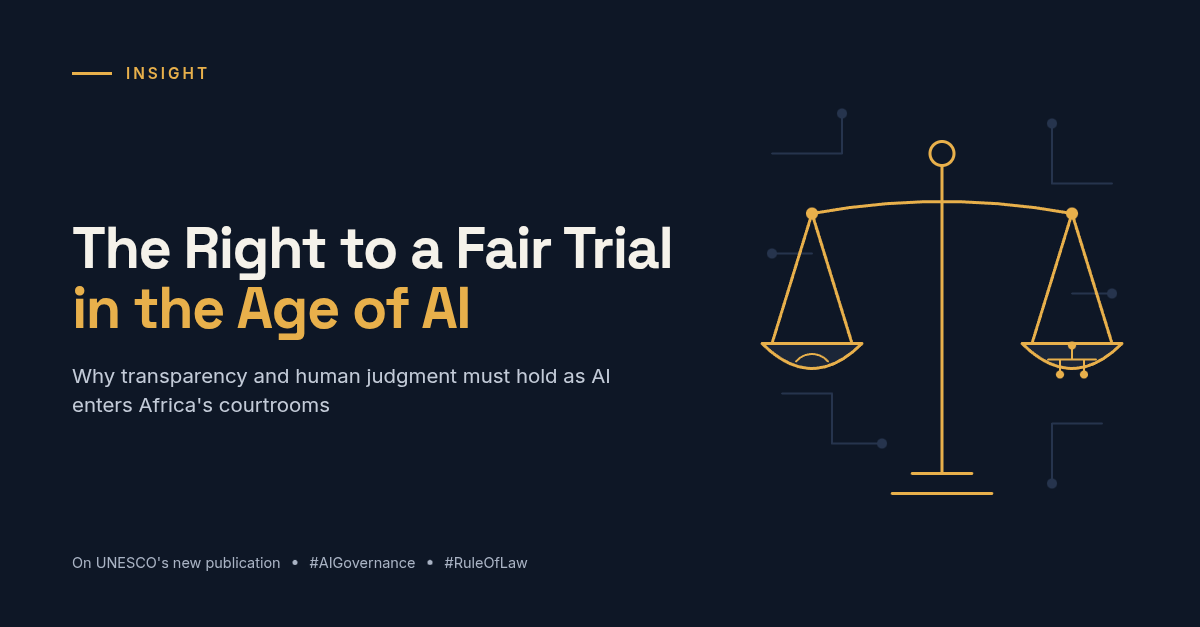
Artificial intelligence is no longer a distant prospect for the justice system. Courts around the world already use it for transcription, case management and legal research. UNESCO's new publication, The Right to a Fair Trial in the Age of AI, developed with the Oxford Institute of Technology and Justice and the Blavatnik School of Government, comes at a crucial moment. It asks a simple question: can the core guarantees of justice survive the arrival of intelligent machines?
The answer starts with a basic principle. Fair trial rights, such as an impartial tribunal, equality of arms, the presumption of innocence and a reasoned judgment, don't change because a new tool is faster or cheaper. Transparency becomes a due-process issue. If a party cannot understand or challenge an AI-assisted decision, their right to a defence is weakened. Above all, human judgment must stay at the centre, because accountability cannot be handed over to an algorithm.
For Africa, the stakes are especially high. Case backlogs and limited resources make AI attractive, but imported systems trained on foreign data can embed bias and erode public trust. African judiciaries should adopt AI deliberately, with clear guidelines, training for judges and lawyers, and independent oversight. Justice delayed is justice denied, but automating justice without safeguards puts justice itself at risk.
📖 Read the publication: https://lnkd.in/g6bWEWEW
#AIGovernance #RuleOfLaw #HumanRights #AIinAfrica #UNESCO