
Insight
The Internet Connectivity Gap and Africa's AI Ambitions
By James Mane · November 3, 2026 · 2 min read
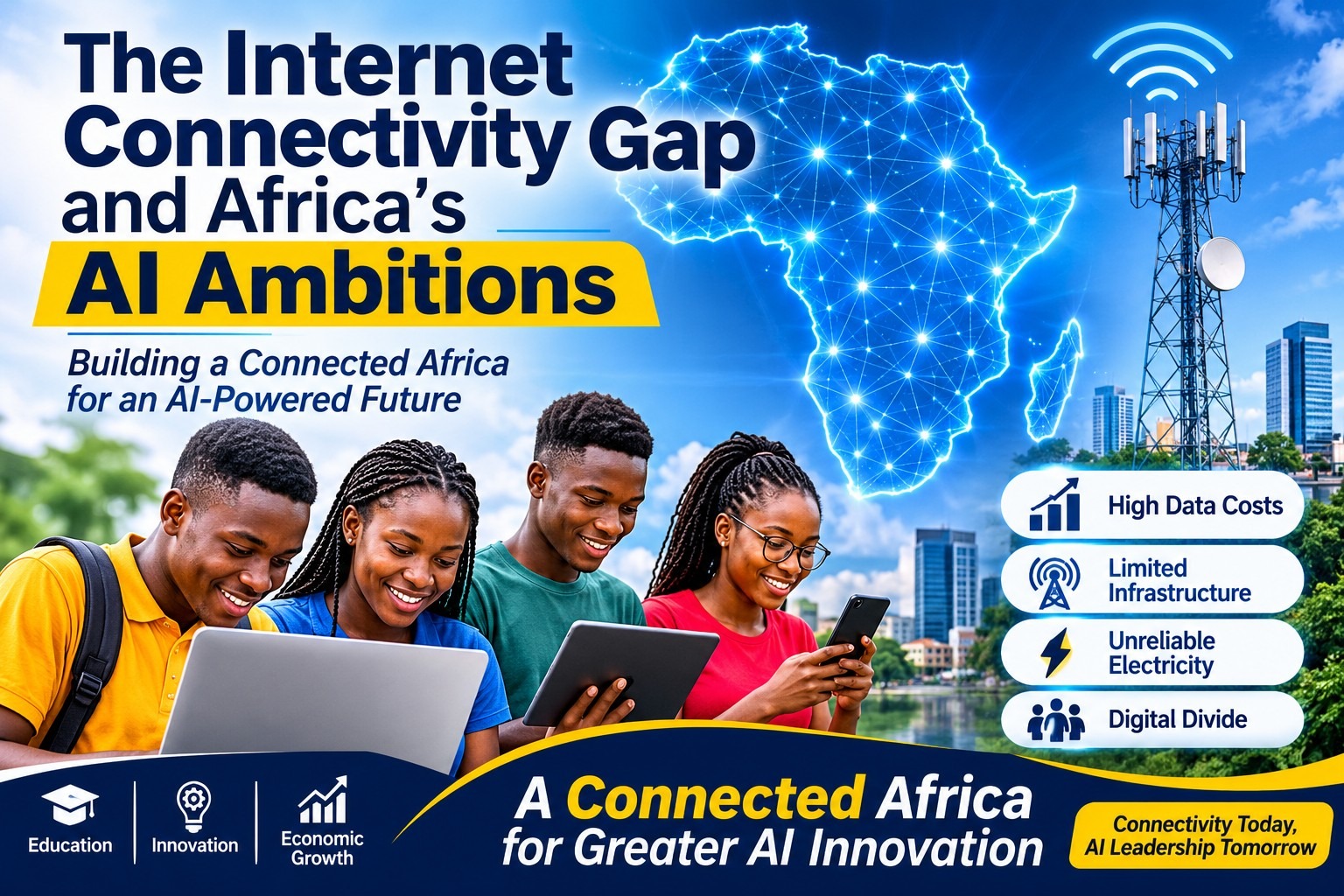
Artificial intelligence is reshaping economies, industries, and societies. However, Africa's ability to participate meaningfully in this transformation depends heavily on one critical factor: reliable and affordable internet connectivity.
Despite growing digital adoption, internet access remains uneven across the continent. High data costs, limited broadband infrastructure, unreliable electricity, and the digital divide between urban and rural communities continue to restrict access to AI technologies. These challenges affect students, researchers, entrepreneurs, businesses, and public institutions seeking to leverage AI for innovation and economic development.
AI applications increasingly depend on high-speed internet for accessing cloud computing platforms, training and deploying models, processing large datasets, and using advanced digital tools. Without dependable connectivity, African innovators risk becoming consumers of technologies developed elsewhere rather than active contributors to global AI advancement.
Countries such as Ghana, Kenya, Rwanda, and South Africa are making progress in digital infrastructure development. However, sustained investment in fibre-optic networks, 5G connectivity, satellite internet, affordable broadband, and community-based digital infrastructure remains essential.
Africa's AI ambitions cannot be achieved through algorithms and innovation alone. They require an inclusive digital foundation that connects people, institutions, and businesses.
The future of African AI will depend not only on what the continent can build, but also on how effectively it can connect.