
Insight
Powering Artificial Intelligence in Africa: The Energy Challenge Behind AI Data Centers
By James Mane · November 2, 2026 · 2 min read
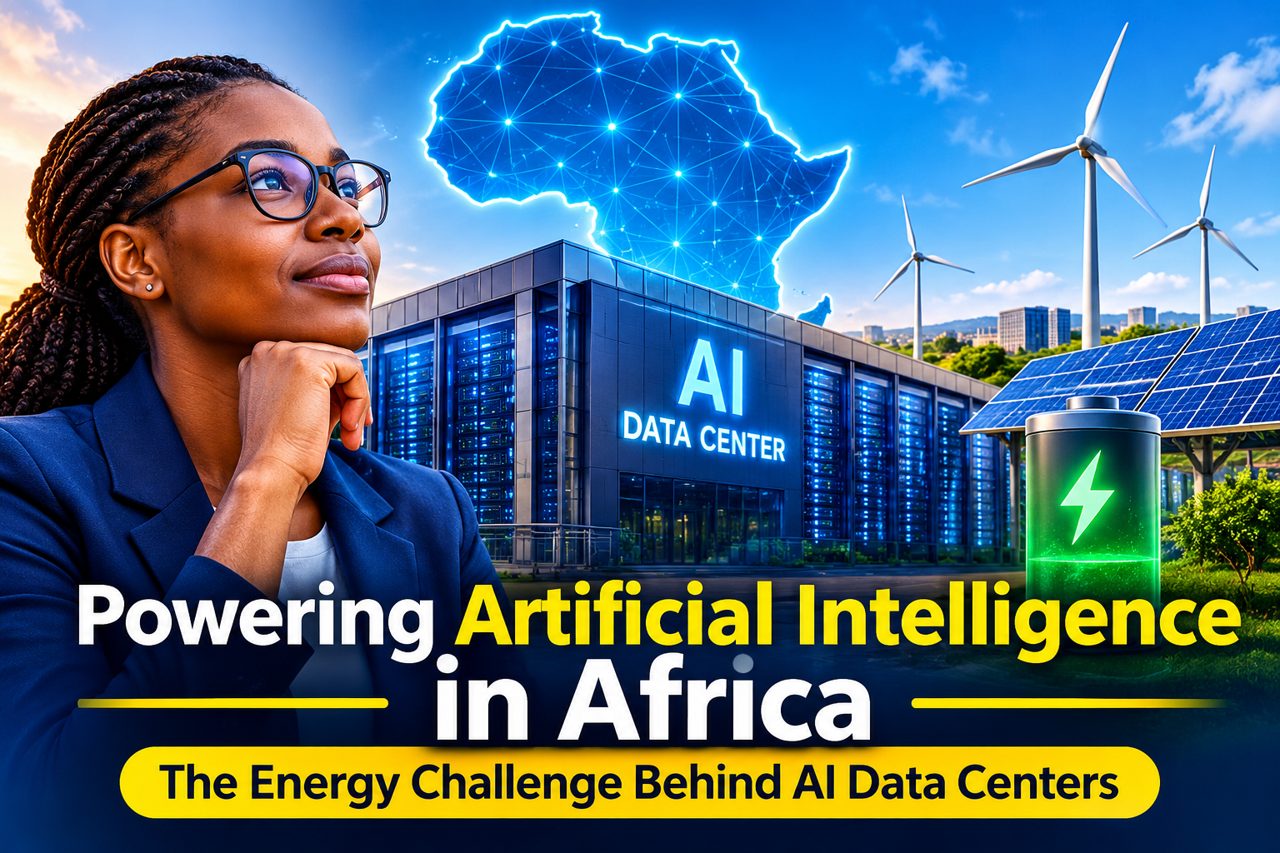
Artificial intelligence is often presented as a software revolution, but AI ultimately depends on physical infrastructure and, above all, reliable electricity. AI-ready data centres require continuous power for high-performance servers, GPUs, networking systems and cooling. This presents a major challenge for Africa, where electricity infrastructure remains uneven. Around half of Sub-Saharan Africa's population lacks reliable power, while 78 percent of firms report routine electricity outages.
The infrastructure gap is equally significant. Africa still accounts for less than 1 percent of global installed data-centre capacity, despite having nearly a fifth of the world's population. The continent's existing capacity is also highly concentrated geographically. The IEA estimates that Africa's data-centre electricity consumption was below 1 kWh per capita in 2024, highlighting how limited the continent's computing infrastructure remains compared with major global technology markets.
Yet concrete African projects demonstrate possible solutions. In South Africa, Teraco began construction of a 120 MW solar power plant intended to support its data-centre operations and next-generation cloud and AI computing. Its Cape Town hyperscale expansion has also reached 50 MW of critical IT load. In Kenya, the Microsoft and G42 initiative proposed a major green data-centre campus at Olkaria powered by renewable geothermal energy, illustrating how Africa's natural energy resources can become a competitive advantage for AI infrastructure.
The central lesson is clear. Africa's AI future will depend not only on talent, algorithms and data, but on the continent's ability to build reliable, affordable and increasingly sustainable electricity systems. AI policy must therefore be integrated with energy planning. Renewable generation, grid modernisation, battery storage, efficient cooling and dedicated power arrangements should become strategic components of Africa's AI infrastructure agenda.