
Insight
The AI Governance Framework: Building Trustworthy AI for Africa’s Future
By James Mane · November 10, 2026 · 1 min read
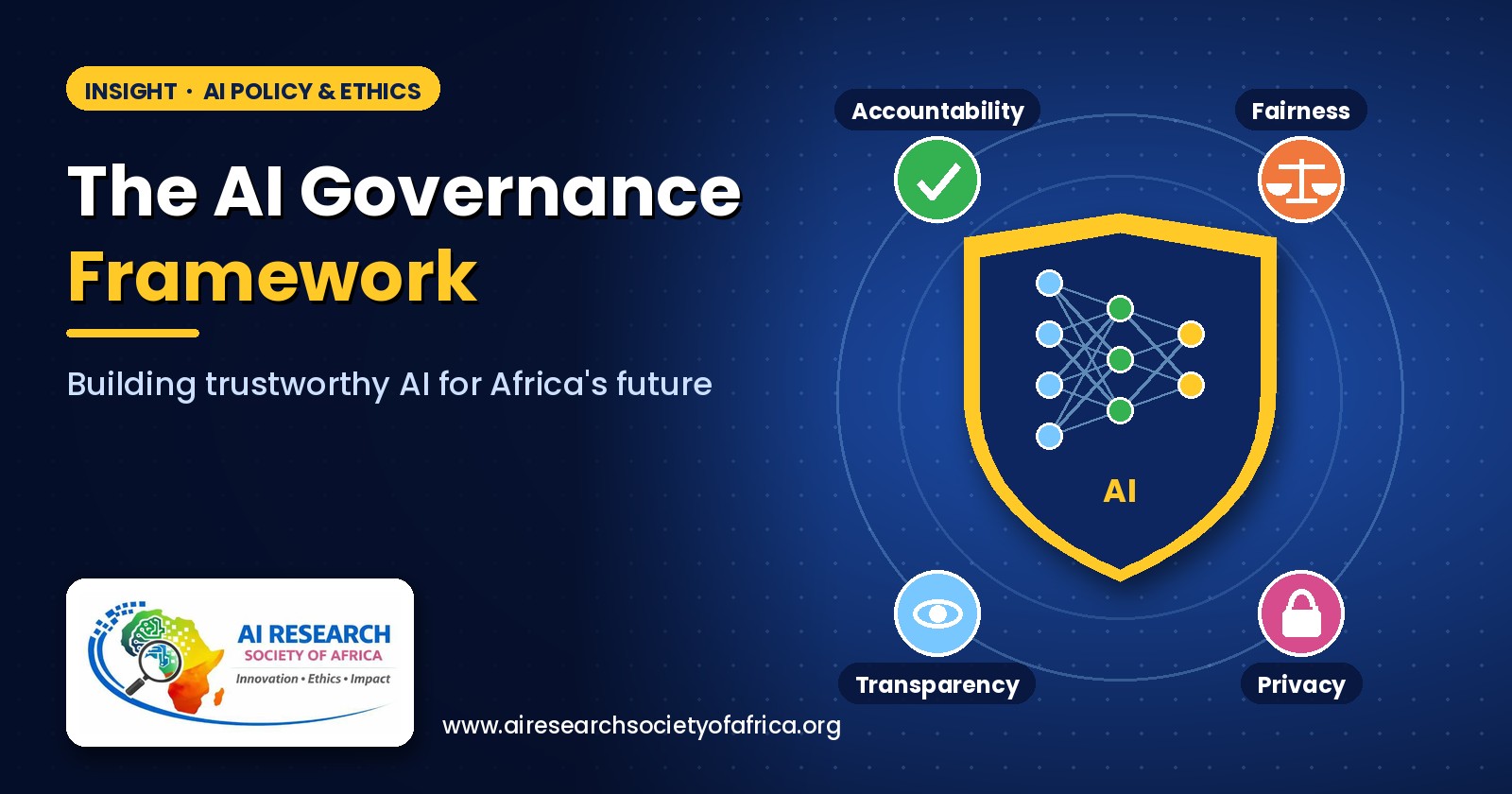
As Artificial Intelligence moves from research labs into hospitals, banks, farms and government services, a critical question arises: who sets the rules? An AI governance framework provides the answer. It is a structured set of principles, policies and oversight mechanisms that guide how AI is designed, deployed and monitored.
A strong framework rests on a few core pillars. Transparency means people understand how AI decisions are made. Accountability means there is clear responsibility when systems cause harm. Fairness prevents bias against communities underrepresented in training data. Privacy and data protection safeguard citizens’ personal information. A framework also requires risk assessment, so that high-impact systems in areas such as health, finance and justice face stronger scrutiny.
For Africa, governance must reflect local realities. The African Union’s Continental AI Strategy offers a shared direction, but countries must translate it into national policies, regulators with technical capacity, and standards that protect data sovereignty.
Good governance is not a barrier to innovation; it builds the public trust that innovation depends on. By combining ethical principles with practical oversight, Africa can harness AI to drive inclusive growth while ensuring that technology serves people, not the other way around.