
Insight
Redefining Software Engineering Competencies in the AI Era
By James Mane · November 10, 2026 · 1 min read
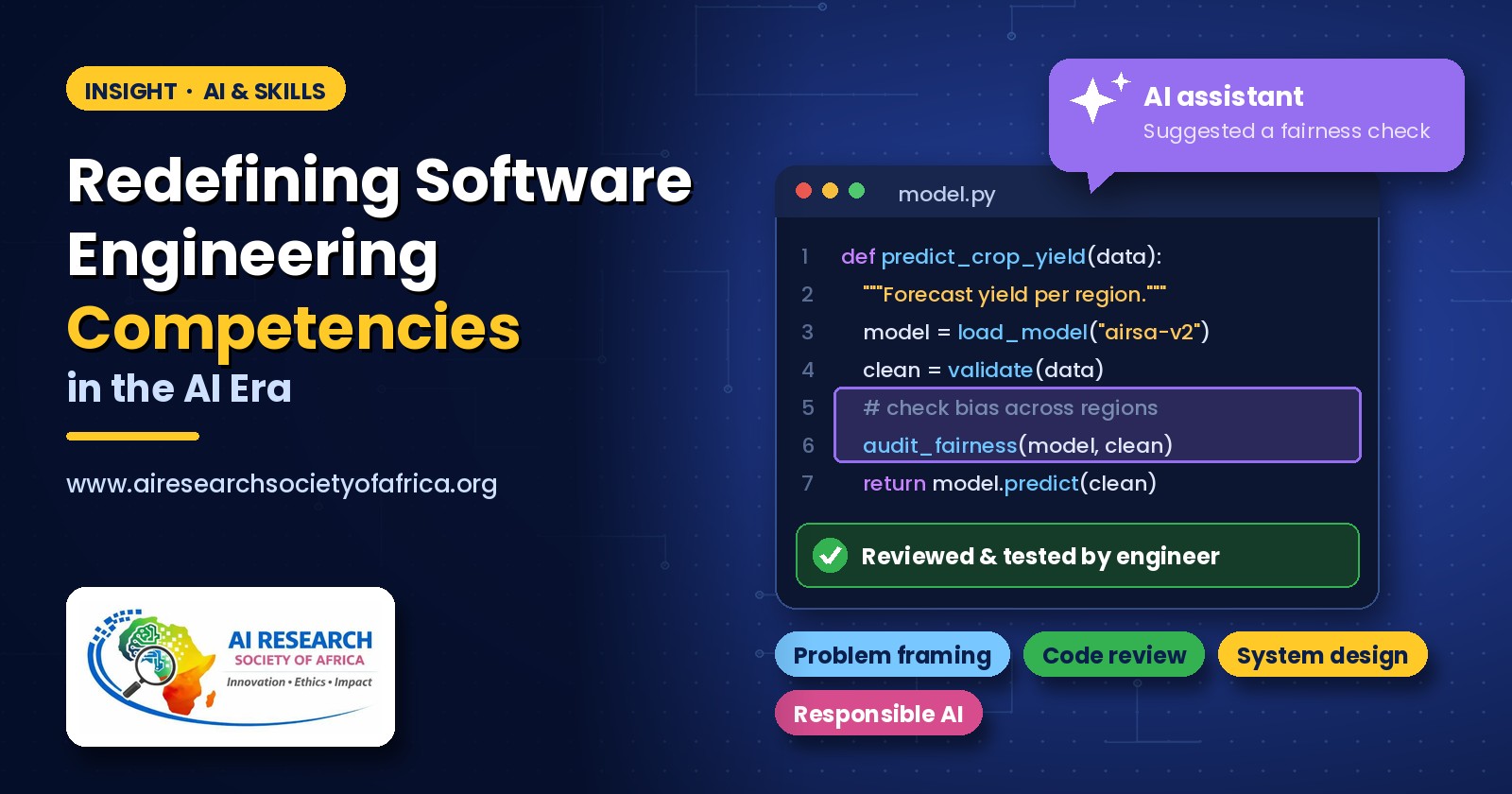
Artificial Intelligence is transforming how software is built. AI coding assistants can now generate functions, write tests, fix bugs and explain unfamiliar code in seconds. As routine coding becomes faster and more automated, the question is no longer whether software engineers will use AI, but what skills will set great engineers apart.
The new competencies go beyond writing code. Engineers must master problem framing: translating real-world needs into clear requirements that AI tools can act on. They need strong code review and verification skills, because AI-generated code can be confidently wrong, insecure or inefficient. System design and architecture grow in importance as engineers orchestrate AI components, data pipelines and models into reliable products. Responsible AI practices, including privacy, fairness, security and transparency, are becoming core engineering responsibilities rather than optional extras.
For Africa, this shift is a major opportunity. Universities and training programmes must update curricula to blend computer science fundamentals with AI literacy, critical thinking and ethics, while giving students hands-on experience with modern AI tools.
The engineer of the future is not replaced by AI but amplified by it. Those who combine technical depth, sound judgment and human creativity will lead Africa’s digital future.