
Insight
Protecting the Coast, Protecting Livelihoods: AI for Smarter Coastal Planning and Climate Adaptation in West Africa
By James Mane · November 10, 2026 · 2 min read
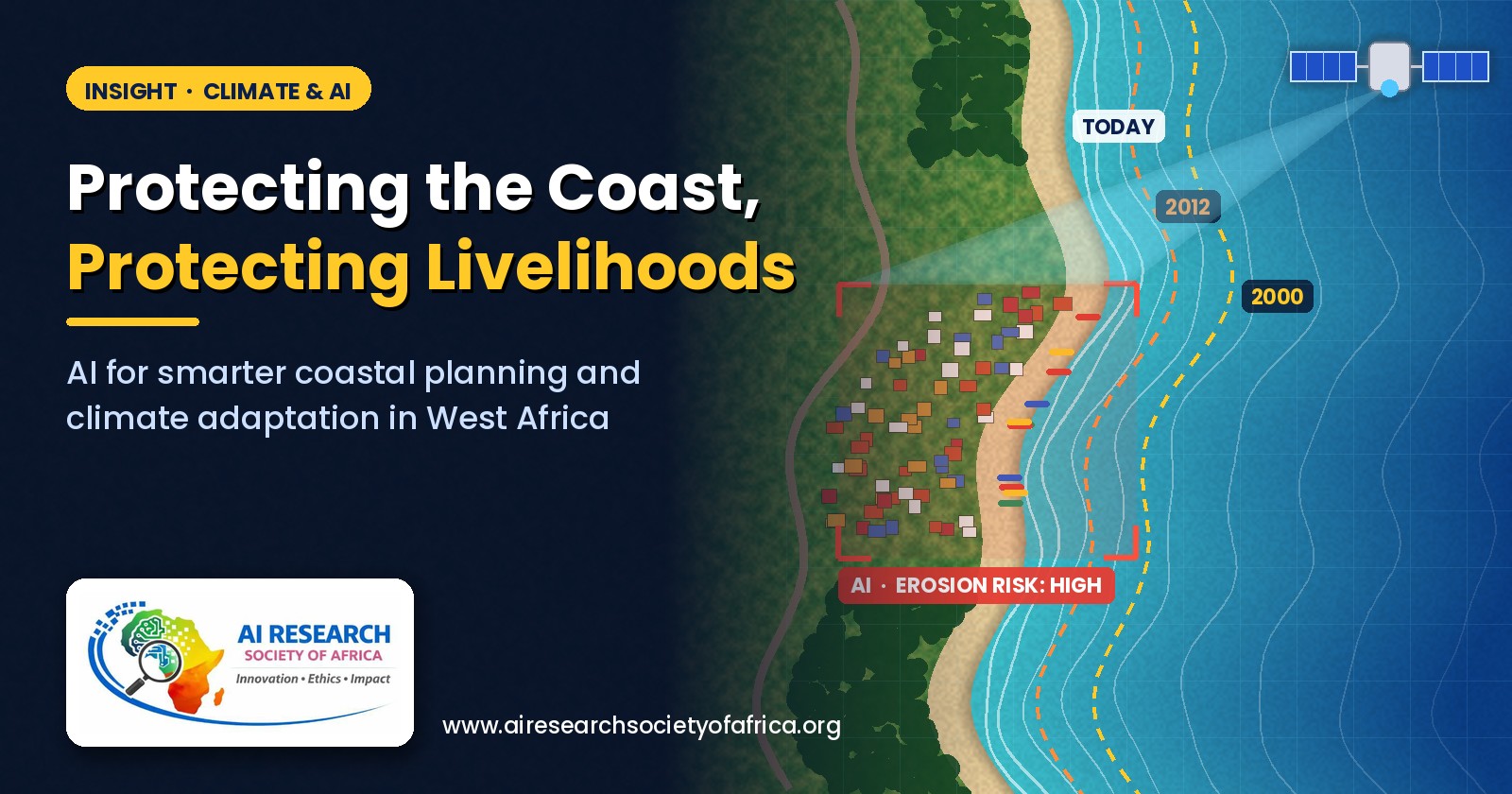
West Africa’s coastline is home to major cities, busy ports, fishing communities and tourism hubs. Yet rising sea levels, storm surges and human pressures such as sand mining and mangrove loss are steadily eroding it. Artificial Intelligence offers a powerful way to move from reacting to coastal disasters to planning for them.
By combining satellite imagery, ocean and climate data, and machine learning, AI can simulate how shorelines may change under different scenarios. These insights help governments compare adaptation options such as sea walls, beach nourishment, mangrove restoration or managed relocation, and choose the solutions that offer the greatest long-term protection at the lowest cost. AI can also detect illegal sand mining and track mangrove loss, both major drivers of erosion.
For coastal communities, this means protecting more than land. It means safeguarding fishing livelihoods, homes, schools, ports, cultural heritage and the coastal economies that sustain millions.
However, coastal erosion does not respect national borders. West African countries must strengthen regional data sharing, invest in local technical expertise and institutional research capacity, and develop AI models trained on African coastlines.
With smarter, data-driven planning, West Africa can build coastlines that are not only protected but resilient for generations to come.