
Insight
Is AI-Assisted Research Data Analysis Credible?
By James Mane · November 27, 2026 · 2 min read
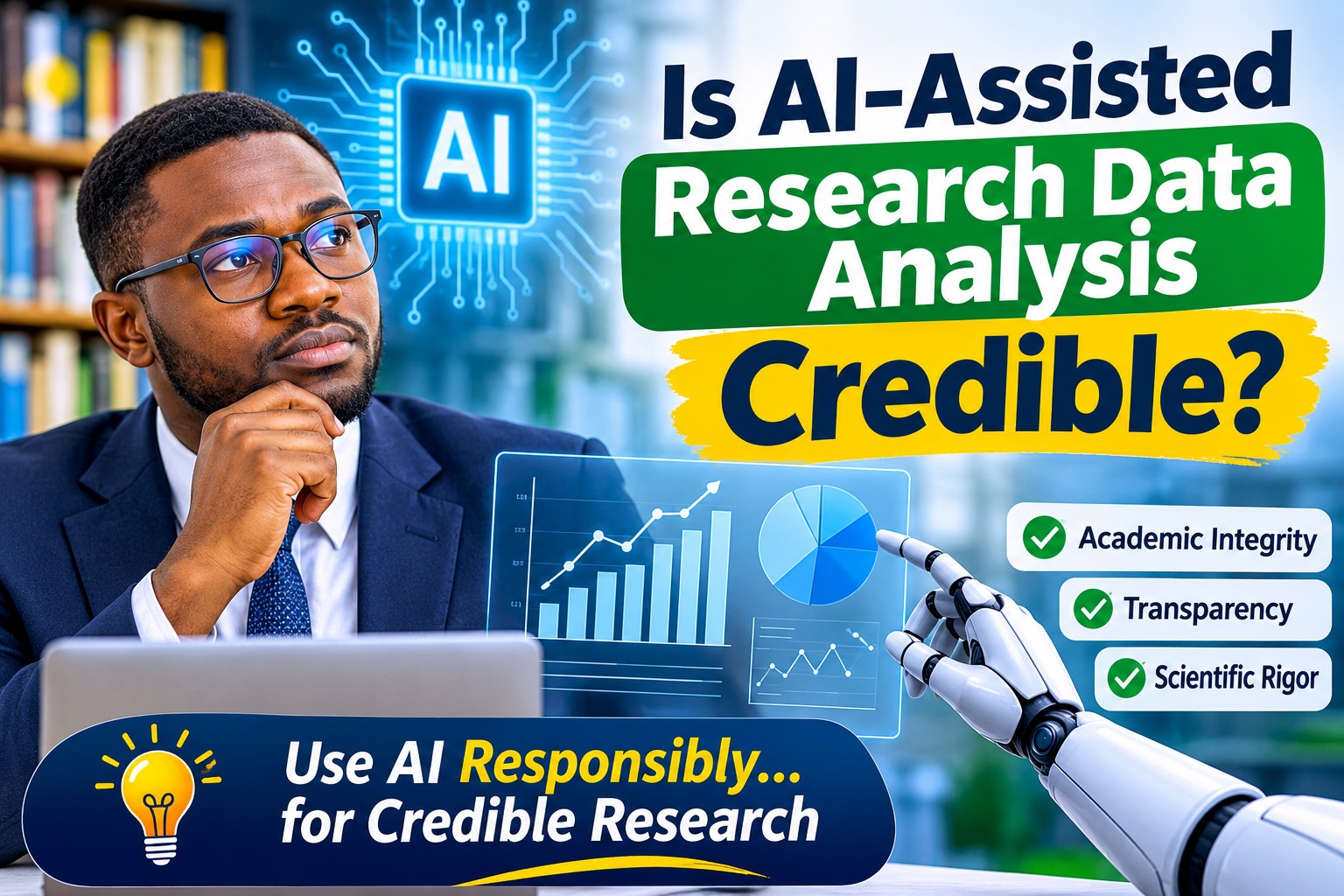
Artificial Intelligence (AI) is increasingly transforming academic research, particularly in data processing, statistical analysis, interpretation and visualisation. Tools such as ChatGPT, Python-based AI systems, R-assisted analytical tools and machine learning applications are changing how researchers approach quantitative and qualitative data. However, an important question remains. Is AI-assisted research data analysis scientifically credible, or does its use compromise the reliability and integrity of academic research?
The credibility of AI-assisted research data analysis depends not simply on the technology being used but on how it is applied. AI can support researchers in selecting statistical techniques, developing analytical codes, performing regression analysis, identifying relationships between variables, conducting thematic analysis and interpreting statistical outputs. When appropriately implemented, these applications can improve analytical efficiency, reduce repetitive tasks and expand researchers' capacity to investigate complex datasets. Nevertheless, AI-generated outputs are not automatically accurate. Errors in statistical assumptions, coding, model selection and interpretation can produce misleading conclusions.
From an academic integrity perspective, using AI does not inherently constitute research misconduct. The concern arises when researchers rely entirely on AI-generated findings without understanding, validating or taking responsibility for the analytical process. Fabricating results, manipulating datasets, concealing substantive AI involvement and presenting unverified outputs as established scientific evidence undermine research integrity. Therefore, transparency, methodological justification, reproducibility and independent verification must remain central to AI-assisted research.
Universities and research institutions are increasingly developing guidelines that recognise responsible AI use while maintaining academic standards. However, institutional acceptance varies, particularly regarding disclosure requirements, confidential research data and the extent of permissible AI involvement.
Ultimately, AI should complement rather than replace the researcher's analytical judgement. Its credibility must be established through empirical validation, methodological rigour and transparent application. The future of academic research should not be defined by whether researchers use AI, but by whether they use it responsibly, critically and scientifically.