
Insight
Building Trustworthy AI Through Ethics, Accountability, and Responsible Innovation
By James Mane · August 5, 2026 · 2 min read
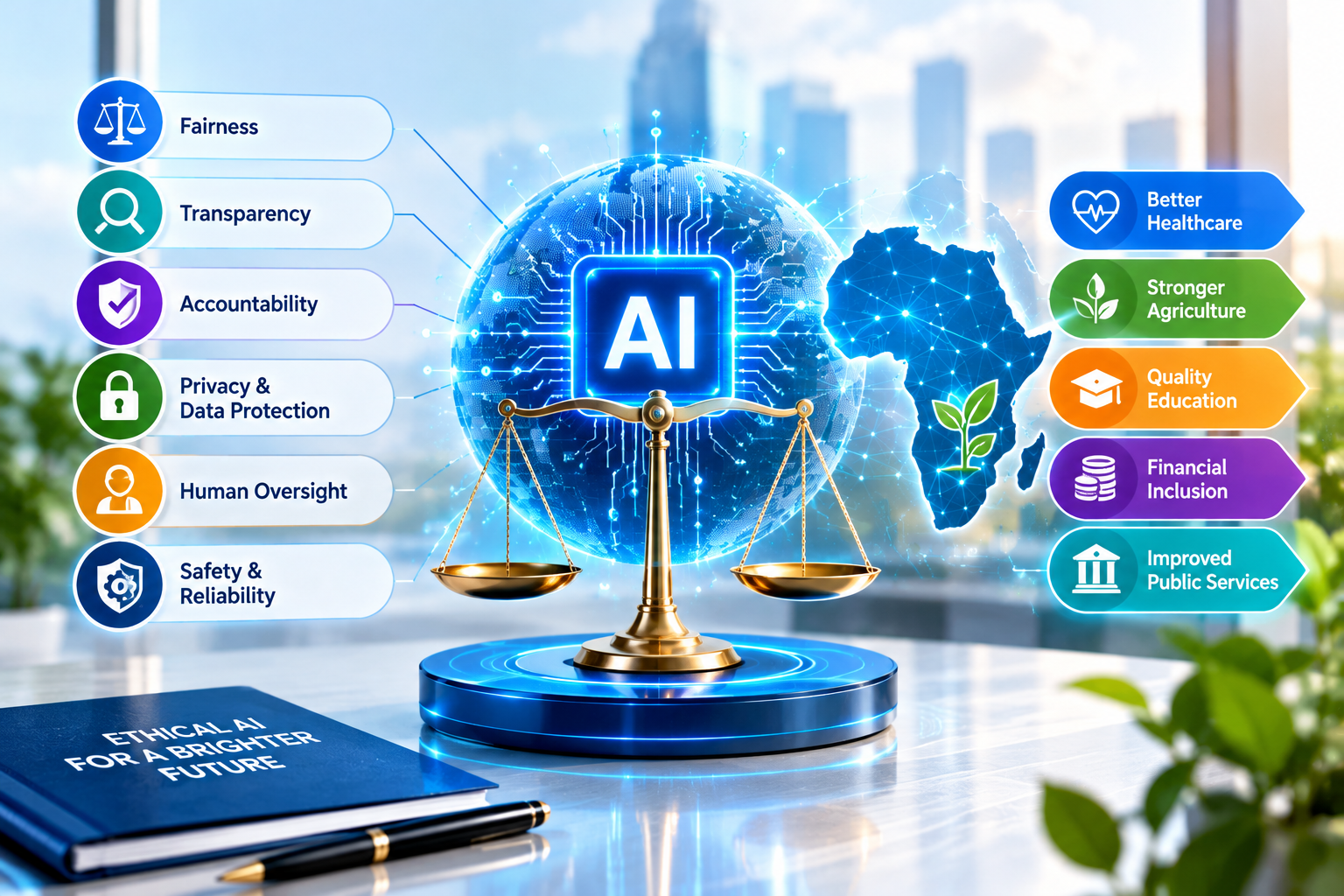
Artificial Intelligence (AI) is transforming healthcare, finance, education, agriculture, and public administration by improving efficiency, supporting decision-making, and creating new opportunities for innovation. However, as AI systems increasingly influence important decisions, ethical concerns surrounding fairness, privacy, accountability, transparency, and safety are becoming more significant.
AI ethics refers to the principles and practices that guide the responsible development, deployment, and governance of intelligent technologies. Its primary objective is to ensure that AI benefits society while minimising risks such as discrimination, misinformation, privacy violations, and unintended harm.
Responsible AI requires fairness in algorithmic decisions, transparency in automated processes, and clear accountability for system outcomes. Organisations must protect personal data, implement strong cybersecurity measures, and maintain appropriate human oversight, particularly in high-risk areas such as healthcare, employment, finance, and criminal justice. AI systems should also undergo rigorous testing and continuous monitoring to ensure their reliability and safety.
Despite its benefits, AI presents challenges, including algorithmic bias, limited explainability, deepfakes, misinformation, and potential job displacement. Addressing these concerns requires representative datasets, regular audits, effective governance policies, digital literacy, and investment in workforce reskilling.
Governments and regulators have an important responsibility to establish frameworks that protect citizens while encouraging responsible innovation. Businesses, universities, researchers, and technology developers must also collaborate to promote ethical standards and build public confidence.
For Africa, responsible AI presents opportunities to improve agriculture, healthcare, education, financial inclusion, and public service delivery. Investing in local research, AI education, and inclusive governance can help ensure that technological solutions reflect African needs and social contexts.
Ultimately, trustworthy AI depends on more than advanced technology. Fairness, transparency, accountability, privacy, and meaningful human oversight must guide its development. Ethics is not a barrier to AI innovation; it is the foundation for sustainable, inclusive, and trustworthy technological progress.
AI ethics refers to the principles and practices that guide the responsible development, deployment, and governance of intelligent technologies. Its primary objective is to ensure that AI benefits society while minimising risks such as discrimination, misinformation, privacy violations, and unintended harm.
Responsible AI requires fairness in algorithmic decisions, transparency in automated processes, and clear accountability for system outcomes. Organisations must protect personal data, implement strong cybersecurity measures, and maintain appropriate human oversight, particularly in high-risk areas such as healthcare, employment, finance, and criminal justice. AI systems should also undergo rigorous testing and continuous monitoring to ensure their reliability and safety.
Despite its benefits, AI presents challenges, including algorithmic bias, limited explainability, deepfakes, misinformation, and potential job displacement. Addressing these concerns requires representative datasets, regular audits, effective governance policies, digital literacy, and investment in workforce reskilling.
Governments and regulators have an important responsibility to establish frameworks that protect citizens while encouraging responsible innovation. Businesses, universities, researchers, and technology developers must also collaborate to promote ethical standards and build public confidence.
For Africa, responsible AI presents opportunities to improve agriculture, healthcare, education, financial inclusion, and public service delivery. Investing in local research, AI education, and inclusive governance can help ensure that technological solutions reflect African needs and social contexts.
Ultimately, trustworthy AI depends on more than advanced technology. Fairness, transparency, accountability, privacy, and meaningful human oversight must guide its development. Ethics is not a barrier to AI innovation; it is the foundation for sustainable, inclusive, and trustworthy technological progress.