
Insight
AI and the Environment: Can Artificial Intelligence Help Fight Climate Change?
By James Mane · October 19, 2026 · 2 min read
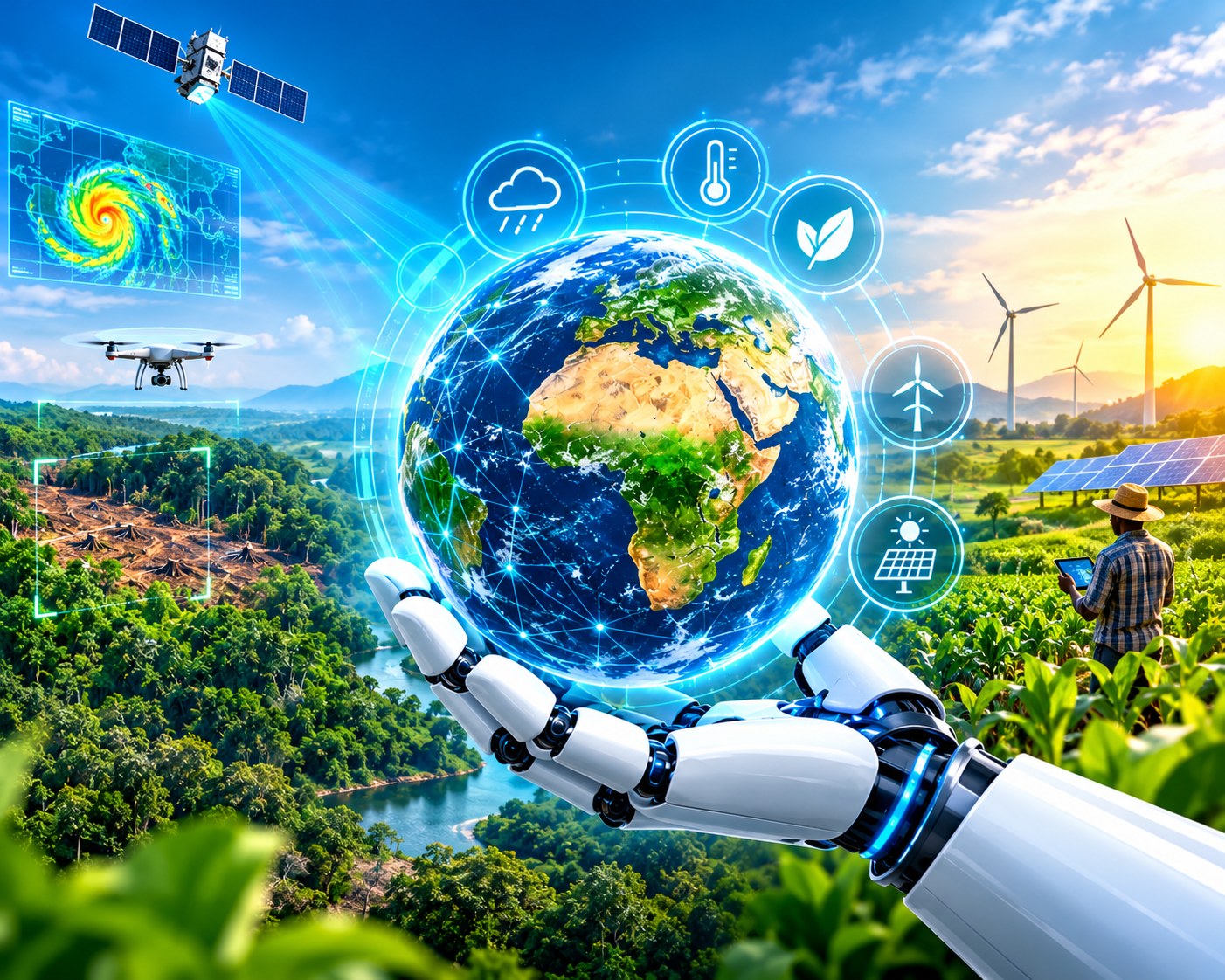
Climate change is one of the greatest challenges facing humanity. Rising temperatures, floods, droughts, and unpredictable rainfall continue to affect communities worldwide, particularly in vulnerable African regions. Artificial intelligence (AI) offers new ways to understand these challenges and develop practical solutions.
AI can analyse large amounts of climate data to predict weather patterns, monitor deforestation, detect wildfires, and identify areas at risk of flooding. In agriculture, AI-powered tools can help farmers make better decisions about irrigation, planting seasons, and crop management. Smart energy systems can also reduce electricity waste and improve the use of renewable energy sources such as solar and wind power.
However, AI is not a perfect solution. Training and operating advanced AI systems require electricity, water, and computing infrastructure, which can contribute to environmental pressure. Therefore, developing energy-efficient AI technologies is essential.
For Africa, the opportunity is significant. Researchers, universities, governments, and innovators can collaborate to build affordable AI solutions that address local environmental challenges.
Ultimately, AI alone cannot stop climate change. Its impact will depend on responsible innovation, effective policies, and human commitment to protecting the environment.
The big question: Are we using artificial intelligence to build a more sustainable planet, or creating new environmental problems while solving existing ones?