Insight
Beyond ChatGPT. What Most People Still Do Not Understand About Artificial Intelligence
By James Mane · October 27, 2026 · 2 min read
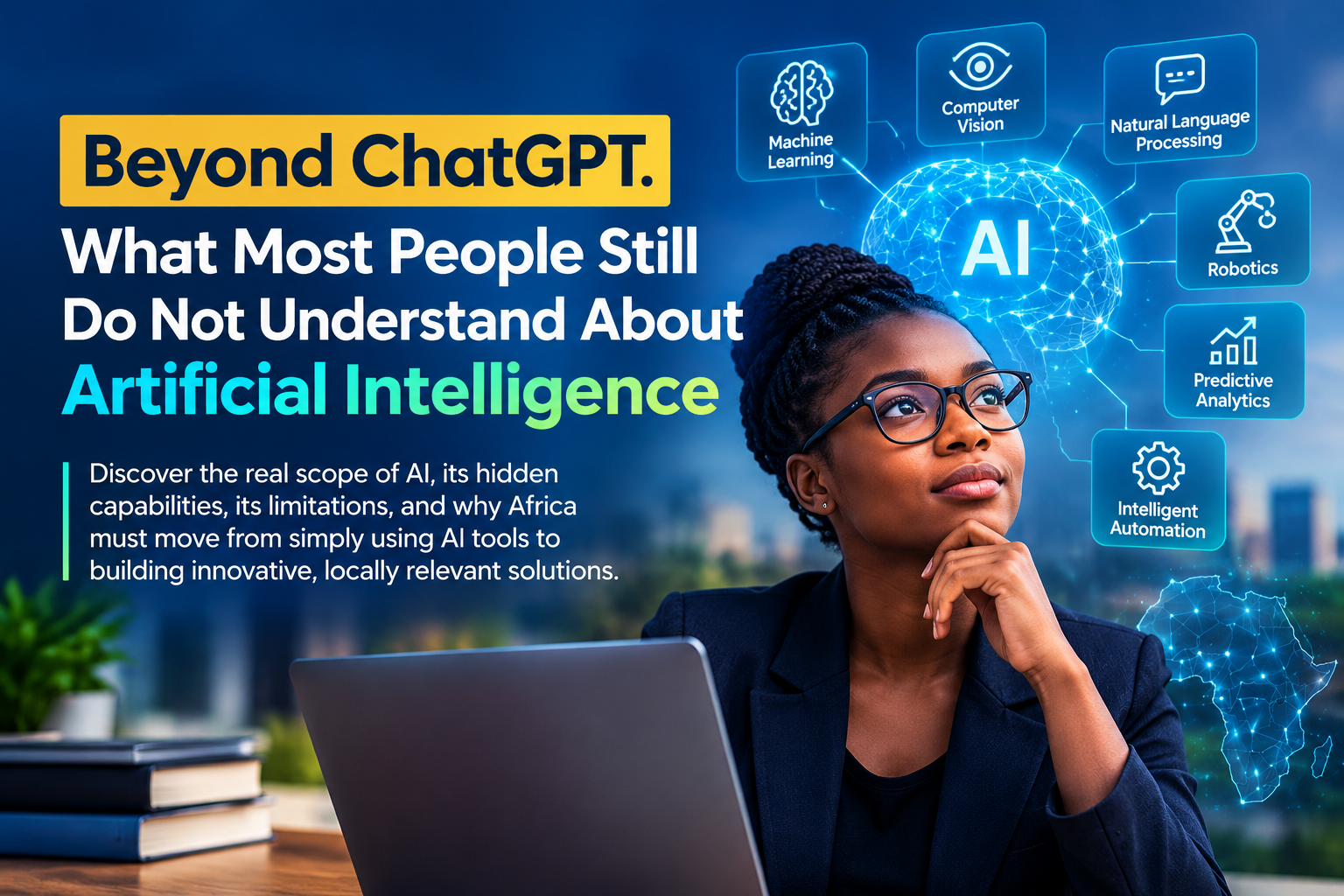
If you think Artificial Intelligence begins and ends with ChatGPT, you may be overlooking one of the most transformative technologies shaping our world.
While millions of people use AI to write emails, answer questions, summarise documents, and generate ideas, these applications represent only a fraction of its potential.
AI extends far beyond chatbots. It encompasses machine learning, computer vision, natural language processing, robotics, predictive analytics, and intelligent automation. These technologies can help detect diseases, forecast market trends, identify financial fraud, optimise agricultural production, and accelerate scientific research.
Another important insight is that AI does not automatically understand the world as humans do. Generative AI systems can produce convincing but inaccurate information. Predictive models can reproduce biases in their training data, while automated systems can make consequential errors without appropriate human oversight.
More importantly, using AI is different from understanding, building, and governing AI.Knowing how to write prompts is useful, but deeper opportunities emerge through data analysis, programming, model development, research, and responsible implementation.
For Africa, this distinction matters. Focusing exclusively on consuming existing AI tools risks overlooking opportunities to develop locally relevant solutions, strengthen research capacity, and participate in the global AI economy.
The future belongs not only to those who use AI, but also to those who understand its limitations, develop its capabilities, and apply it to solve meaningful problems.
The question is this. Are we merely using AI, or preparing ourselves to shape its future.
#ArtificialIntelligence #BeyondChatGPT #AIResearch #DigitalInnovation #AIRSA